


Description
-
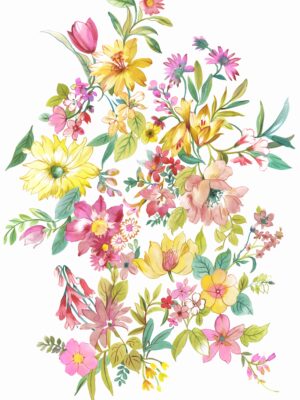
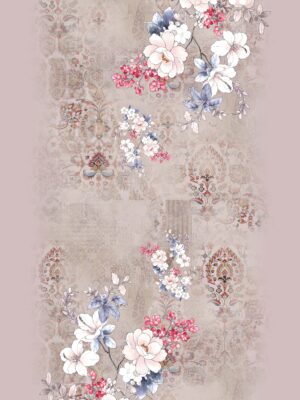
Visual Dispersion (Mechanical): The design exhibits “Aqueous Scumble-Mottling Dispersion.” The pigments are dispersed in a combination of smooth, saturated washes and high-friction “dry-brush” accents characteristic of Wet-on-Dry Watercolor. This provides a tactile “velvet” surface quality where color density is intentionally fractured at the petal edges to mimic natural light refraction, allowing the background white to “vibrate” through the darker tones.
-
Pigment Dispersion (Zonal): The design features “Viscous Zonal Graduation.” Dispersion is strictly organized by the “radial” structure of the blooms. The color moves from high-density, opaque crimson or deep blue centers to light, vaporous “washed” ivory tints at the petal tips, mimicking the natural movement of liquid pigments meeting a drying mineral surface.
-
Edge Dispersion (Sharp-to-Frayed): The boundaries of the forms feature a “Defined Transition.” While the primary stems and leaf skeletons maintain a sharp, high-contrast dispersion to define the architectural shape, the outer petals utilize a frayed, “dry-brush” dispersion that ensures the motifs feel hand-rendered rather than mechanically stamped.




Reviews
There are no reviews yet.