


Description
-
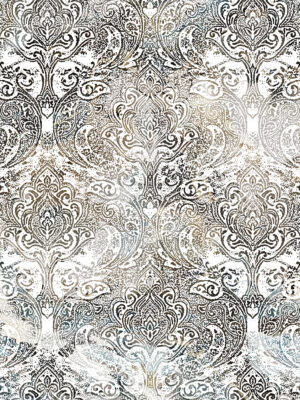
Visual Dispersion (Mechanical): The design exhibits a “Zero-Bleed Lithographic simulation Dispersion.” The pigments are applied to mimic the uniform, dense ink distribution of traditional hand-painted Kalamkari or modern screen printing.
This creates a “solid” dispersion where each color maintains absolute purity, ensuring the complex overlapping of vines and leaves remains perfectly legible for technical garment production.
-
Pigment Dispersion (Zonal): The design utilizes “Defined Zonal Saturation.”
-
The Primary Colors: Utilize a “viscous-flat” dispersion—maximum pigment density in the red and blue zones to create high-contrast relief against the neutral ground.
-
The Shadow Layer: Utilizes a “vaporous” dispersion, where the subterranean tan silhouettes are applied with low-density transparency to create the illusion of depth without competing with the primary motifs.
-
-
Edge Dispersion (Sharp-Path Transition): The boundaries feature a “Defined-Graphic Transition.” Form is defined by the energy of the obsidian-black line-work. The perimeters of every petal and serrated leaf possess a “clean-cut” dispersion, ensuring structural integrity across large-scale fabric panels.








Reviews
There are no reviews yet.