


Description
-
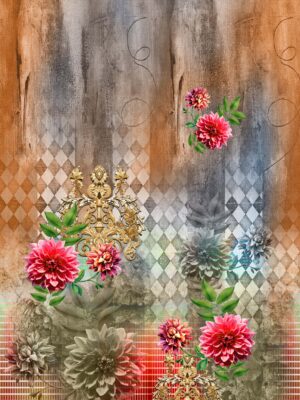
Visual Dispersion (Mechanical): The design exhibits “Xerographic Scumble-Mottling Dispersion.” Within the background and the edges of the terracotta leaves, the pigments are dispersed through high-friction application characteristic of Dry-Brush Technique or Chalk on Plaster. This provides a tactile “ragged” surface quality where color density is intentionally broken, mimicking the natural weathering of an antique screen or a mineral-washed stone wall.
-
Pigment Dispersion (Zonal): The design features “Friction-Dry Graduation.” Dispersion is organized by the speed and pressure of the stroke. The color moves from high-density, opaque obsidian nodes to light, vaporous “ghosted” ivory textures, mimicking the natural loss of pigment as a brush moves across a rough, porous substrate.
-
Edge Dispersion (Sharp-to-Frayed): The boundaries of the forms feature a “Temporal Transition.” The primary black filigree maintains a sharp, high-contrast dispersion to define the architectural shape, while the larger color masses utilize a frayed, “sanded” dispersion that ensures the design feels physically integrated into the atmospheric “decay” of the background.





Reviews
There are no reviews yet.